
Your Next Buyer Is Reading Your One-Star Reviews: What Every D2C Brand Needs to Know
Your website shows five-star ratings. Your product pages look perfect. But what happens when your potential customer checks Google and discovers a one-star review?

November 6, 2026 · 7 min read


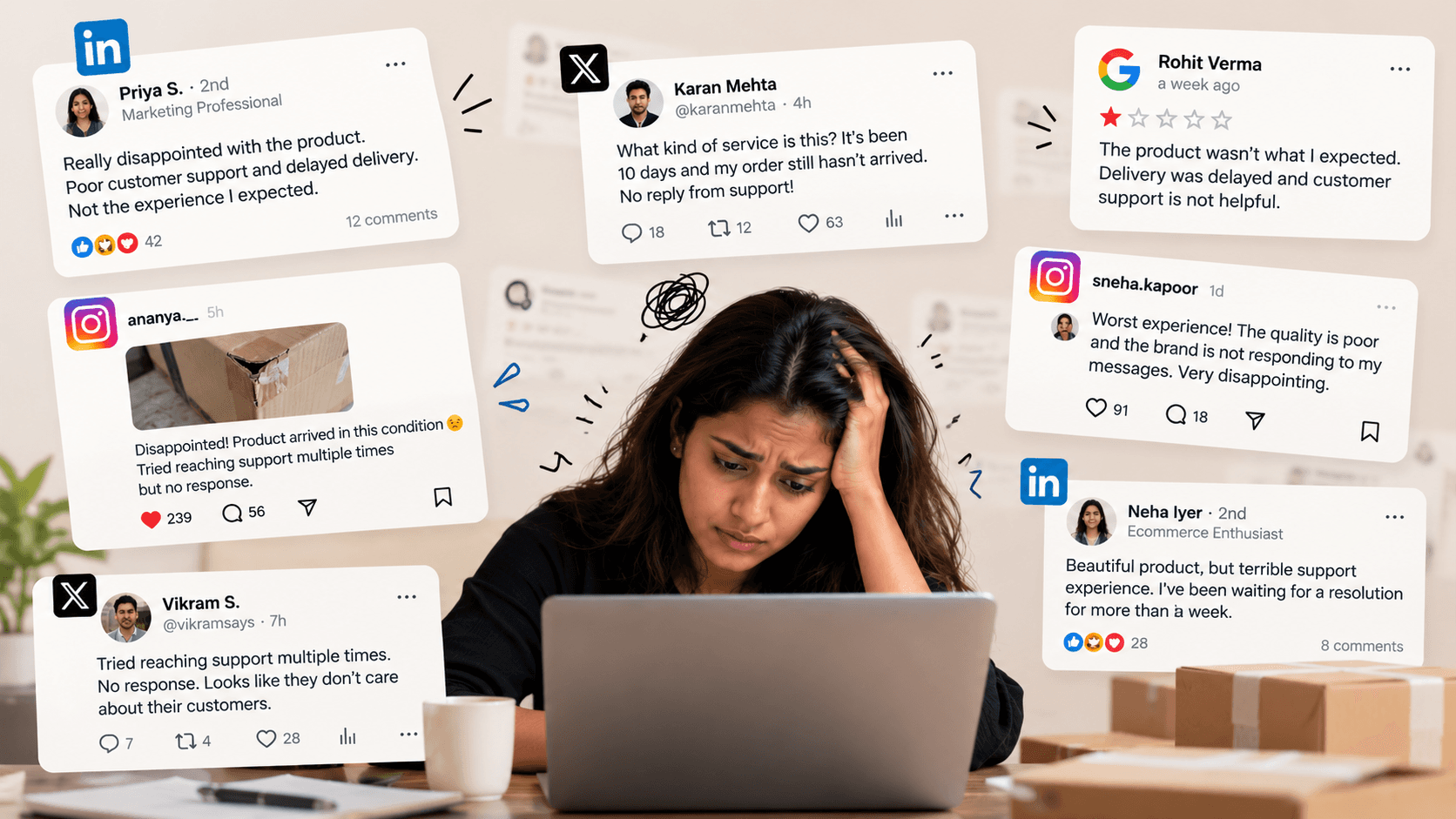
Imagine a customer discovering your brand through an Instagram advertisement.
They like your product, visit your website and explore the product page. The photographs look impressive, the description is convincing, and every customer review displays five stars.
Everything looks perfect.
But before making a purchase, they pause.
They want to know more about the brand. So, they open Google, search for your brand name and explore what other customers are saying.
They find a one-star review.
“The product wasn't what I expected. Delivery was delayed, and nobody responded when I contacted support.”
Suddenly, the customer has doubts.
Should I trust this brand? Will I face the same problem? What happens if something goes wrong?
The customer who was ready to purchase now has a reason to reconsider.
This is the reality of online shopping today.
Your next buyer's confidence may depend on your previous buyer's experience.
For D2C brands investing heavily in customer acquisition, this is an important part of the buying journey that cannot be ignored.
1. Why Do Buyers Look Beyond Your Website?
Your website is where you present your brand in the best possible way. You showcase attractive product images, communicate your promises and display positive customer reviews.
But potential customers don't always rely on what brands say about themselves.
They look for independent experiences to validate their decisions.
They might check:
- Google reviews to understand the overall brand experience.
- Third-party review platforms to explore customer opinions.
- Social media comments to discover genuine customer discussions.
- Product reviews to understand quality, delivery and usage experiences.
Interestingly, research from Northwestern University's Spiegel Research Center found that purchase likelihood tends to peak when product ratings are between 4.0 and 4.7 stars, rather than at a perfect five stars.
This suggests that a perfect rating isn't necessarily the strongest signal of credibility.
Customers want reassurance, but they also value believable experiences.
A trustworthy brand isn't one where everything looks perfect. It's one where customer experiences feel genuine.
Source: Northwestern University – How Online Reviews Influence Sales
2. A One-Star Review Can Influence Your Next Purchase
Why do customers actively look for negative reviews?
Because they want to understand what could go wrong before spending their money.
A customer might find a complaint about delayed delivery, damaged packaging, product quality or poor customer support.
For the person who wrote the review, it represents a disappointing experience.
For the potential buyer reading it, it represents a possible risk.
Research from PowerReviews found that consumers actively seek negative reviews when researching products. Its 2021 study reported that 52% specifically sought out one-star reviews.
This tells us something important: customers aren't just looking for reasons to buy. They are also looking for reasons to feel confident about their decision.
For D2C brands, a negative review is therefore more than a rating. It can influence how another customer perceives the brand.
3. The Real Problem Starts Before the Review Becomes Public
A one-star review usually has an experience behind it.
Consider a customer who orders a premium skincare product.
The product arrives, but the packaging is damaged. The customer feels disappointed and tries contacting the brand. They don't receive the support they expected.
Eventually, they leave a negative review.
The brand might discover the issue only after the review becomes public.
But what if the brand had understood the customer's concern earlier?
What if the customer had a simple way to communicate the issue directly to the brand?
The brand would have an opportunity to understand what happened, respond and offer an appropriate resolution.
This doesn't guarantee that the customer won't leave a negative review. But it gives the brand an opportunity to act before the issue escalates.
A delivered order doesn't necessarily mean a satisfied customer.
Brands need to understand the actual experience, not just track whether an order was delivered.
4. Don't Just Collect Star Ratings. Understand the Experience Behind Them.
Many D2C brands already collect customer reviews through WhatsApp, emails and automated post-purchase messages.
But a star rating doesn't always explain why a customer is happy or unhappy.
Imagine three customers giving the same product a one-star rating.
- One experienced delayed delivery.
- Another received damaged packaging.
- The third felt the product didn't match expectations.
The rating is the same, but the problems are completely different.
Without understanding the reason, brands may miss opportunities to improve.
A stronger post-purchase strategy should help brands:
- Understand what customers actually experienced.
- Identify recurring delivery, packaging and product concerns.
- Give customers an accessible way to contact the brand.
- Respond to concerns and offer appropriate resolutions.
- Use customer experiences to improve future buying decisions.
The goal isn't to eliminate negative opinions or hide genuine customer experiences.
It is to understand what went wrong and create opportunities to make things better.
5. How BuyerProof Helps Brands Connect Customer Experience With Buyer Confidence
This is where BuyerProof creates a different opportunity for D2C brands.
Most brands focus on attracting customers and collecting reviews. BuyerProof helps them understand customer experiences after the purchase and makes genuine buyer experiences useful to the next customer.
Here's how:
Collect customer experiences
BuyerProof helps brands collect genuine buyer experiences directly from customers after they receive their orders.
Identify concerns
Brands can understand product, delivery and packaging experiences and identify where customers may be facing problems.
Provide support
Customers get an opportunity to connect with the brand and raise concerns through BuyerProof's support experience, so brands can support customers after purchase.
Show genuine experiences on product pages
BuyerProof brings customer experiences to product pages, helping potential buyers understand what previous customers actually experienced.
Build buyer confidence
Instead of relying only on promotional claims and product photographs, potential buyers get additional context from genuine customer experiences that help build buyer confidence.
This connects two important parts of the buying journey: the experience of the existing customer and the purchase decision of the next customer.
Conclusion: Your Next Buyer Is Reading Your Previous Buyer's Experience
Every D2C brand wants more customers to discover its products, trust its promises and complete a purchase.
But trust isn't built through marketing alone.
It is also shaped by what existing customers experience.
A one-star review can create hesitation. An unresolved concern can become a public complaint. And an experience the brand never understood can influence someone else's buying decision.
You cannot control every customer opinion. You cannot guarantee that every experience will be perfect.
But you can listen to customers, understand their concerns and create opportunities to resolve issues.
Don't wait for a one-star review to tell you something went wrong. Understand the experience behind it.
Because every customer experience is an opportunity to build trust and shape the next buyer's confidence.
Discover how BuyerProof helps brands understand customer experiences and build buyer confidence. Book a BuyerProof demo
Frequently Asked Questions
Do one-star reviews influence customer purchase decisions?
Yes. One-star reviews can introduce doubts about product quality, delivery reliability and customer support. Potential buyers often read negative experiences to understand possible risks before purchasing.
Why do customers check Google reviews before buying online?
Customers use Google reviews to learn about other people's experiences, validate brand claims and understand how a business handles customer concerns.
How can D2C brands reduce negative reviews?
Brands can proactively collect post-purchase experiences, identify customer concerns, provide accessible support and resolve issues wherever possible. This can reduce the risk of unresolved concerns becoming public complaints, although negative reviews cannot be eliminated entirely.
Why is collecting star ratings not enough?
Star ratings communicate customer sentiment but may not explain the reason behind it. Understanding product, delivery, packaging and support experiences gives brands more actionable information.
How does BuyerProof help D2C brands?
BuyerProof helps brands collect customer experiences after purchase, identify concerns, provide support and showcase genuine buyer experiences on product pages. This helps brands understand existing customers and give future buyers more information when making purchase decisions.
Can customer experiences build buyer confidence?
Yes. Genuine customer experiences provide potential buyers with additional information about product quality, delivery and brand service, helping them make more informed decisions.
0 Reactions
About the Author
Product Designer & Strategist